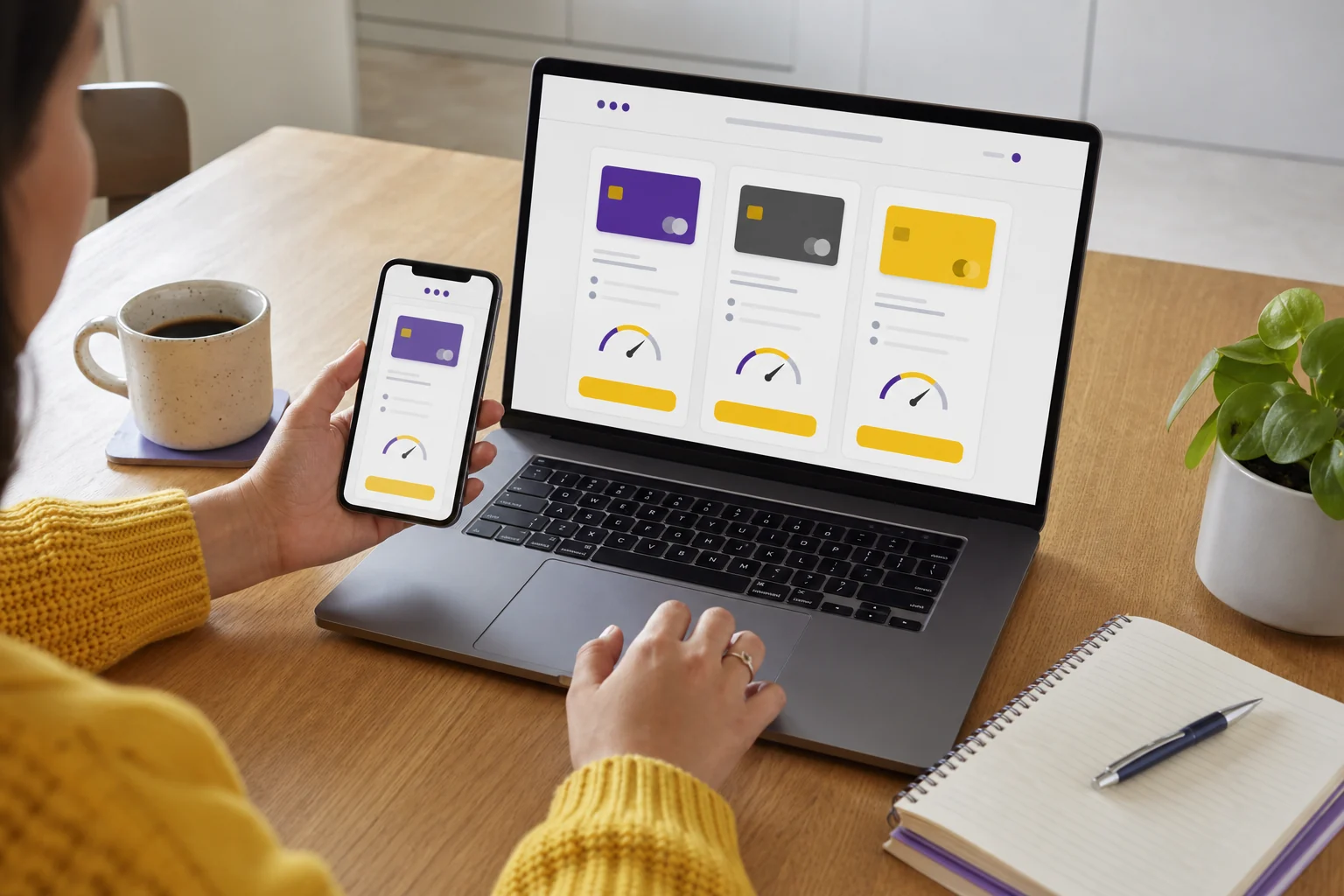
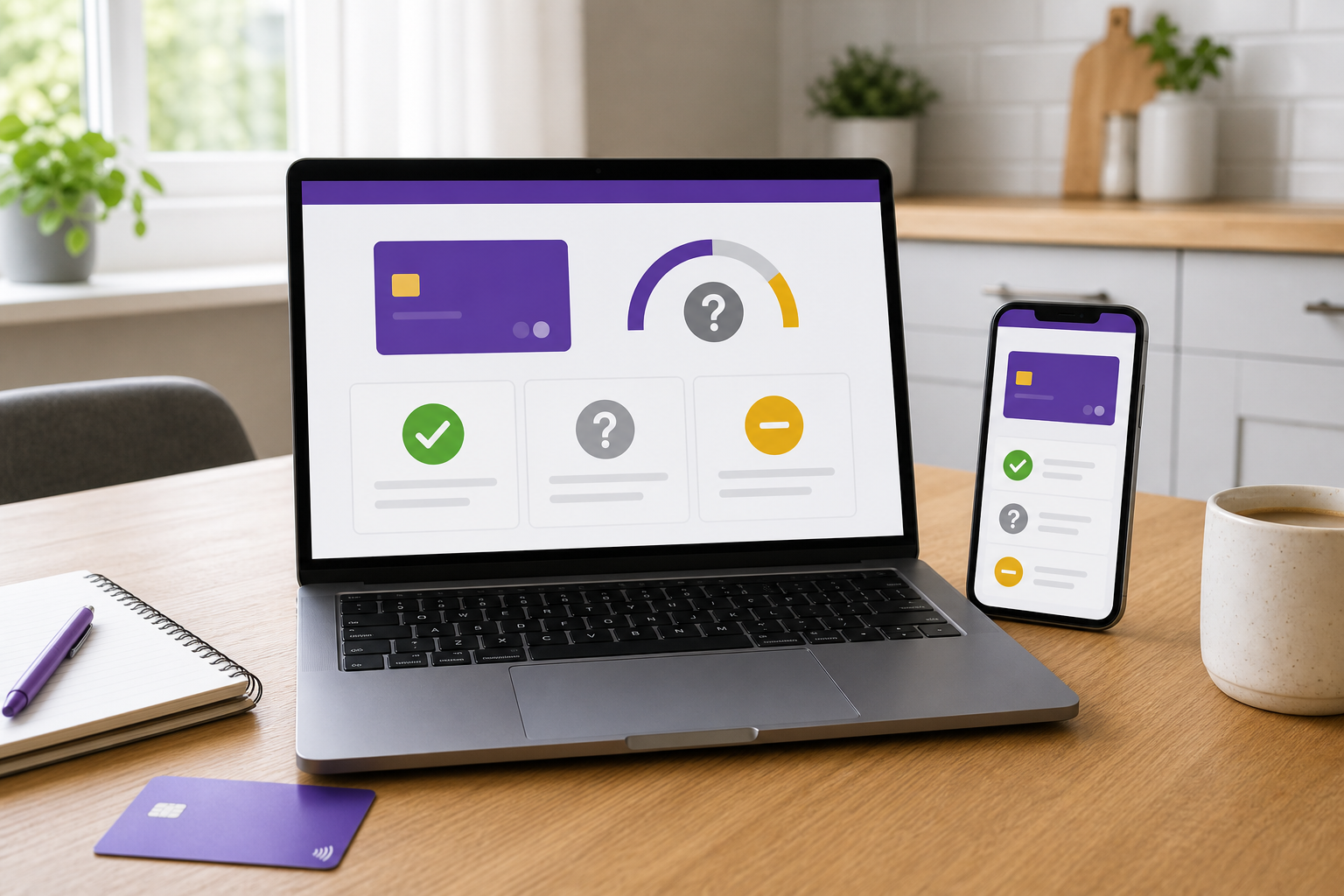
Bad Credit Card Eligibility Checker
A plain-English guide to checking your chances before you apply, what a soft search can tell you, and when bad-credit card options may be worth comparing.

If you have bad credit, a credit card application can feel like a gamble. You see a card, wonder whether you will be accepted, and then hesitate because a full application may leave a hard search on your credit file. That is exactly where a credit card eligibility checker for bad credit can help.
An eligibility checker is not magic and it is not a promise. It is a safer first step. It uses the details you provide, and usually a soft search, to estimate whether a card may fit your profile before you decide whether to make a full application.
That matters most when your credit history is less than perfect. If you apply blindly for several cards and get declined, the hard searches can make future applications harder. If you check eligibility first, you get a clearer view of your options before you put a proper application on the table.
What Is a Credit Card Eligibility Checker?
A credit card eligibility checker is a tool that estimates how likely you are to be accepted for a card. It normally asks for personal details such as your name, address history, employment status, income, housing costs and sometimes information about existing borrowing.
The checker compares that information with lender criteria. It may also use a soft credit search to look at selected information from your credit report. The result is usually shown as a likelihood, match, rating or pre-application indication.
Experian describes eligibility as how likely you are to be approved for a specific credit deal based on how your credit information matches lender criteria. That is the key point: eligibility is about fit, not just whether your score is good or bad. You can read Experian's eligibility checker guide for more background.
How It Helps If You Have Bad Credit
Bad credit can make the credit-card market confusing. Some cards are built for people with stronger files, while others are designed for people who are rebuilding. If you only look at the headline offer, you can end up chasing the wrong card.
An eligibility checker helps narrow the field. Instead of asking, "Can I get any credit card?", it helps answer a better question: "Which cards are realistic enough to consider next?" That is a much more useful question when you are trying to avoid unnecessary hard searches.
If you are comparing products specifically for a weaker file, start with the site's credit cards for bad credit guide, then use the credit card eligibility checker before deciding whether to apply.
Soft Search vs Hard Search
Most eligibility checks use a soft search. A soft search can help estimate your chances without being visible to other lenders in the same way as a full application search. You may be able to see it on your own report, but it should not damage your score.
A hard search is different. A hard search usually happens when you make a full application. Other lenders may see it, and several hard searches close together can make you look riskier because it may suggest you are urgently looking for credit.
Experian explains that soft searches are not visible to companies and do not affect your credit score or future applications, while hard searches are recorded when you apply for credit. Our guide to what a soft credit check is explains the practical difference, and Experian's soft and hard credit check guide gives the credit reference agency view.
Eligibility Does Not Mean Guaranteed Approval
This is worth saying clearly: an eligibility checker does not guarantee approval. It gives an estimate based on the information available at that point. The lender can still decline a full application after checking your details more closely.
That can happen if your income cannot be verified, your address history does not match, your credit file has changed, fraud checks raise questions, or affordability looks different during the final application. Annoying? Yes. Unusual? No.
Use the result as a filter, not a certificate. A strong eligibility result can make an application more sensible. A weak result is a warning to pause, check your file and compare a more suitable card type.
What Lenders May Look At
Credit card decisions are not based on one score. Different lenders use different criteria, but these are the areas that often matter:
- Repayment history. Missed payments, defaults, arrears, County Court Judgments and insolvency markers can reduce your options, especially if they are recent.
- Current borrowing. High balances, maxed-out cards and several open credit accounts can make new credit look less affordable.
- Income and spending commitments. Lenders need to consider whether extra credit looks manageable alongside rent, bills, loans and other regular costs.
- Recent applications. Several hard searches close together can make lenders cautious.
- Identity and address stability. If your details do not match your credit file, the result can be weaker.
- Product fit. A credit builder or bad-credit card may be more realistic than a premium rewards card.
The FCA says creditworthiness includes the borrower's ability to make repayments as they fall due. In plain English, lenders should not only ask whether they might get their money back; they also need to think about whether the credit is affordable for the customer. The FCA's creditworthiness and affordability note explains that principle.
When a Bad-Credit Card May Make Sense
A bad-credit or credit-builder card can make sense when you want a small, controlled way to rebuild your file and you can repay on time. These cards often have lower starting limits and higher interest rates, so they are not ideal for carrying debt month after month.
The useful version is simple: spend a small amount, pay it back on time, keep well within the limit and avoid cash withdrawals. Over time, responsible use can help build a stronger pattern on your credit file.
The risky version is also simple: use the card because you are already short of cash, pay interest, miss payments, and make a difficult credit file worse. If that sounds close to your situation, the right next step may be budgeting help or debt advice, not another card.
How to Use an Eligibility Checker Well
- Check your credit report first. Look for wrong addresses, unknown accounts, missed payments you do not recognise and financial links that should no longer be there.
- Use accurate information. Guessing your income, rent or employment details can make the result less useful.
- Compare realistic cards. If your file is weak, start with cards designed for rebuilding credit rather than premium cards.
- Read the costs before applying. APR, fees, cash withdrawal charges and credit limits matter.
- Avoid repeat applications. If the result is low, do not fire off applications anyway. Fix what you can first.
- Apply only when the fit looks sensible. One careful application beats several hopeful ones.
MoneyHelper recommends checking your credit report, fixing mistakes and improving the basics before applying for more credit. Its guide to improving your credit score is a useful next read if your eligibility result is weaker than expected.
What If the Checker Says Your Chances Are Low?
A low eligibility result is not a character judgement. It is a signal. Something in your profile may not match that card right now. The smart response is to slow down, not apply harder.
Start with the obvious checks. Are your details correct? Are you on the electoral roll where possible? Have you recently applied for several products? Are your card balances near their limits? Do you have missed payments or defaults that need time to age?
If you are not sure why your chances look low, read why you may not be eligible for a credit card before making a full application. It is usually better to diagnose the problem than to collect another decline.
Common Mistakes to Avoid
The first mistake is treating eligibility as guaranteed approval. It is not. The second is ignoring the cost of the card because the eligibility result looks promising. A card can be easier to get and still expensive if you carry a balance.
The third mistake is making several applications in a short burst. That can leave hard searches and make later applications harder. The fourth is using a credit card to cover a budget problem that needs a bigger fix.
The fifth mistake is chasing a card type that does not fit your file. If your credit history is damaged, a realistic rebuilding card may be a better first step than a reward card, travel card or long promotional offer.
How 118 118 Money Can Help
118 118 Money is built for people who want a clearer route through borrowing decisions, especially when their credit history is not perfect. The point is not to dress credit up as effortless. It is to help you check fit before you make a bigger move.
You can use the credit card eligibility checker to see whether a 118 118 Money card may suit your profile before deciding whether to apply. You can also compare credit card options or read what credit cards you may be eligible for if you want a broader view first.
Bad credit does not mean you should guess. It means the first check matters more.
Check Before You Apply
See whether a 118 118 Money credit card may fit your profile before deciding whether to make a full application.
Frequently Asked Questions
Can I use a credit card eligibility checker with bad credit?
Yes. A credit card eligibility checker can be useful if you have bad credit because it can estimate your chances before you make a full application. It does not guarantee approval, but it helps reduce blind applications.
Will an eligibility checker affect my credit score?
Most eligibility checkers use a soft search, which should not affect your credit score or be visible to other lenders. A full application can create a hard search.
Does bad credit mean I cannot get a credit card?
Not always. Bad credit can limit your options, but some cards are designed for people rebuilding their credit history. The right card may have a lower limit or higher APR, so costs matter.
Should I apply if my eligibility result is low?
Usually not straight away. A low eligibility result is a signal to check your credit report, fix errors, reduce recent application pressure, and compare more realistic card types before applying.
What can improve credit card eligibility with bad credit?
Paying on time, reducing balances, checking report errors, joining the electoral roll where possible, avoiding several applications close together, and choosing cards built for your profile can all help.